
Selling a House That Needs Major Repairs in Central Florida
Updated October 2026 · By Chris Romany, Founder of House Solutions USA · Buying houses in Central Florida since 2013
The Short Answer
Yes, you can sell a house that needs major repairs in Central Florida without fixing anything first. You can repair it and sell with an agent, sell it as-is with an agent, or sell it directly to a cash buyer who buys houses in any condition. The right choice depends on how much the repairs will cost, how long they will take, and whether a buyer’s lender and insurance company will accept the house the way it is.
This guide is for homeowners in Orange, Seminole, Osceola, Polk and South Lake counties with a house that has an old roof, a failing A/C, plumbing or electrical problems, water damage, code violations or work done without permits. It explains which problems stop a sale, how Florida’s roof and insurance rules affect buyers, and how to sell without spending money you may never get back.
The Repairs That Stop a Sale in Central Florida
Most buyers need two things to buy a house: a mortgage and homeowners insurance. A repair problem becomes a sale problem when it stops either one. These are the issues that most often do it here:
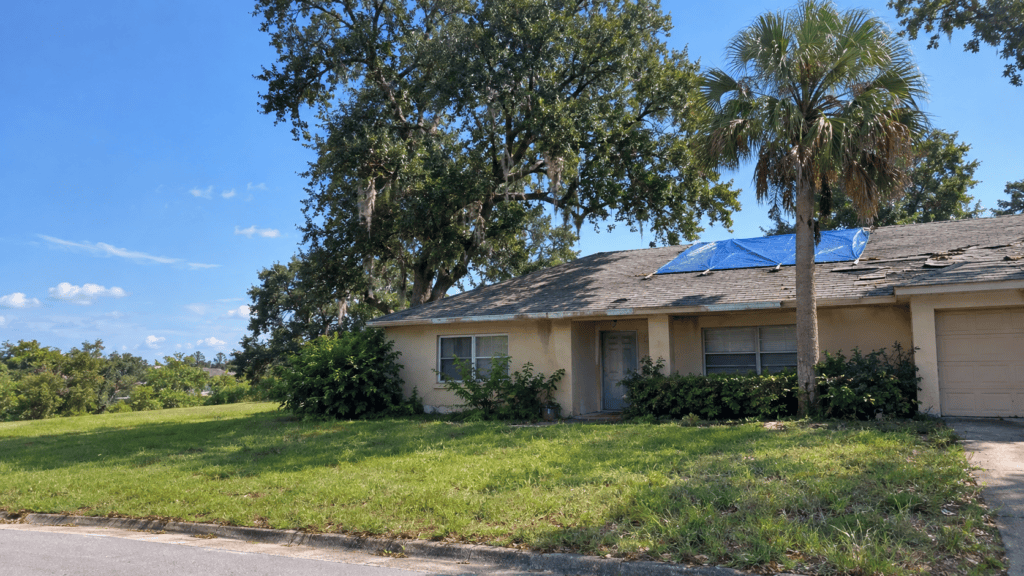
- An old or leaking roof. In Florida, the roof often decides whether a buyer can get insurance at all (more on this below). A roof near the end of its life can stop a sale even if it isn’t leaking yet.
- A failing A/C. In Central Florida the A/C runs most of the year. A dead or very old system is one of the first things a buyer’s inspector writes up, and a house without cooling can quickly develop humidity and mold problems.
- Old plumbing. Leaking supply lines, cast iron drain pipes that are cracking, and older plastic piping that insurers dislike can all lead to repair demands or insurance problems.
- Outdated electrical. Old panels, aluminum wiring and do-it-yourself wiring are common inspection findings, and some insurers won’t cover a house until they’re replaced.
- Water damage and mold. Stains, soft floors and musty smells make buyers worry about what they can’t see, and many walk away.
- Termites and wood rot. Damage to framing, fascia or door frames often shows up in the inspection report and becomes a repair demand.
- Foundation cracks or settling. Even small cracks make buyers nervous, and larger ones can stop a sale until an engineer looks at them.
Government-backed loans such as FHA and VA also have minimum property standards, so a house with safety problems may not qualify for those buyers at all. That narrows your pool of buyers before you even list.
Roof Age and Homeowners Insurance in Florida
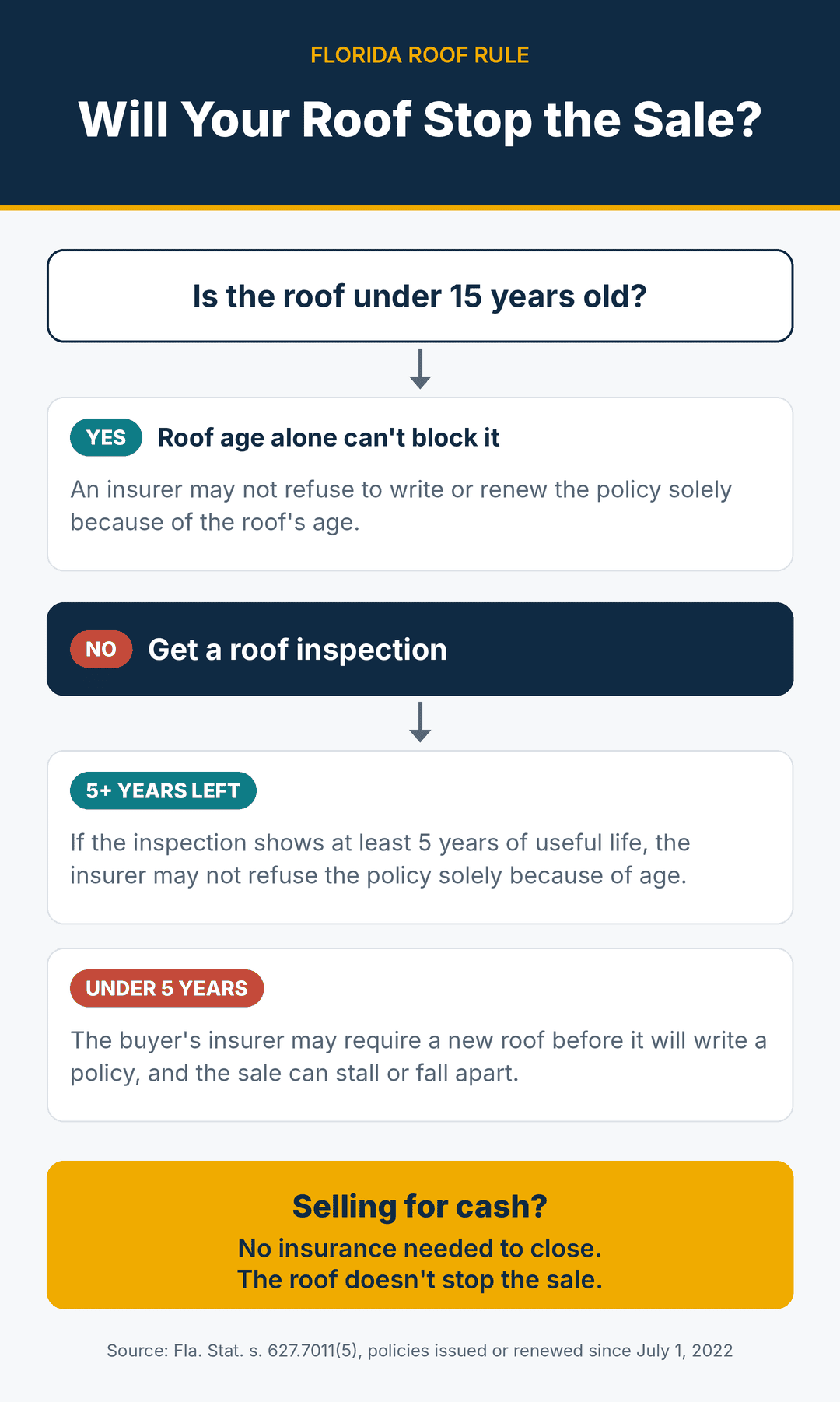
A buyer with a mortgage needs homeowners insurance to close, and in Florida the roof is often the deciding factor. Florida law sets two rules for policies issued or renewed since July 1, 2022:
- Roof less than 15 years old: an insurer may not refuse to write or renew a policy solely because of the roof’s age.
- Roof 15 years or older: before an insurer can require a new roof, the homeowner can have it inspected by an authorized inspector, at the homeowner’s expense. If the inspection shows at least 5 years of useful life left, the insurer may not refuse the policy solely because of the roof’s age.
What this means for a sale: if your roof is older, a buyer may need a roof inspection to get insurance, and if the roof doesn’t pass, the buyer may ask you to replace it or walk away. Find out how old your roof is before you list. The permit record or your original paperwork usually shows the date.
A cash buyer doesn’t need a lender, so the roof doesn’t stop the sale. We look at the roof ourselves and build it into our offer.
Code Violations, Liens and Unpermitted Work
Repairs aren’t the only thing that can hold up a sale. Paperwork problems often travel with a house that has been hard to keep up.
Code violations. If the city or county has cited the house, for overgrown grass, a damaged roof, an unsafe structure or junk in the yard, the fine can keep growing every day until the problem is fixed. Under Florida law, once the order is recorded it becomes a lien on the property. Many local governments will consider reducing a code lien once the violation is corrected, so ask the code enforcement office before you assume the full amount is due.
Other liens. Unpaid property taxes, HOA dues, contractors who weren’t paid and court judgments can also attach to a house. The title company finds them during the title search and pays them from your proceeds at closing, because clear title can’t pass to the buyer until they are paid or released.
Unpermitted work. A garage turned into a bedroom, an enclosed patio or a water heater swapped without a permit can show up when a buyer’s agent or inspector checks the county’s permit records. A buyer’s lender or insurer may ask for the work to be permitted after the fact, which takes time and money. You can look up your permit history on your county or city building department website.
You don’t have to sort all of this out before you sell. Tell the buyer what you know up front, and let the title company handle the payoffs.
Your Three Options
1. Make the repairs, then list with an agent
This can bring the highest price, but only if the repairs cost less than the value they add. You pay for them up front, often before you know the final cost, and you wait for contractors, permits and inspections. While the work goes on, you keep paying the mortgage, insurance, utilities and taxes. A new roof or A/C may not add its full cost to the sale price, because buyers already expect those things to work.
2. List with an agent as-is
You skip the repairs, but the house is marketed to the same buyers who will run an inspection and need a loan and insurance. Expect a lower price, a longer wait, and repair requests or a canceled contract after the inspection. Many of the buyers who do make offers on a house like this are investors anyway, so you end up paying an agent thousands of dollars in commission to sell to the same kind of buyer you could have sold to directly, with no commission at all.
3. Sell directly to a cash buyer
A direct buyer pays without a mortgage, so the roof, the inspection and the insurance company don’t stand between you and closing. There are no repairs, no showings and no commissions. The offer reflects the condition of the house, so it’s lower than what a fully repaired house would bring. But you skip the cost of the repairs, the months of carrying costs and the risk of a deal falling apart.
A quick way to decide: get a written estimate for the major repairs. If the cost is large, the work will take months, or you don’t have the cash to pay for it, a direct sale usually leaves you in a better place.
How House Solutions USA Helps
We have been buying houses in Central Florida since 2013, including houses that need a new roof, a new A/C, new plumbing or a full renovation. When you sell to us:
- You sell as-is. No repairs, no cleaning and no contractors. Leave behind what you don’t want.
- We see the house once and look at its condition ourselves, then give you a written offer within 24 to 48 hours.
- No lender, no appraisal, no insurance hurdle. An old roof or a failed inspection doesn’t stop the sale.
- We pay all closing costs and charge no fees and no commissions.
- You choose the closing date. We have closed in 7 days, and a typical sale takes about 21.
- You pay only what you already owe: your share of the property taxes, any HOA amounts owed and any liens against the house, paid from your proceeds at closing.
If you know about a problem, such as a leaky roof or an old A/C, just mention it and we will factor it in. Call 407-738-1581 or fill out our cash offer form. To see every step, read how we buy houses. If you’re on a deadline, see how to sell a house fast in Central Florida. We buy houses in Orange County, Seminole County, Osceola County, Polk County and South Lake County.
Frequently Asked Questions
Can I sell a house that needs major repairs in Florida?
Yes. You can repair it and sell with an agent, sell it as-is with an agent, or sell it directly to a cash buyer. A cash buyer doesn’t need a lender or insurance to close, so the condition of the house doesn’t stop the sale.
Should I fix my house before selling it?
Only if the repairs will add more to the price than they cost, and you have the time and money to do them. Large repairs like a roof, A/C or plumbing may not pay for themselves, and they add months of carrying costs.
Can I sell a house with an old roof in Florida?
Yes, but a buyer with a mortgage needs insurance. For a roof 15 years or older, an insurer can require an inspection showing at least 5 years of useful life left before writing a policy. A cash buyer doesn’t need insurance to close.
Can I sell a house with code violations or a code enforcement lien?
Yes. The lien is paid from your proceeds at closing. Many local governments will consider reducing a code lien once the violation is corrected, so ask the code enforcement office first.
Can I sell a house with unpermitted work?
Yes. Tell the buyer about it up front. A buyer with a mortgage may need the work permitted after the fact, which can delay closing. A cash buyer can take the house as it is.
Do I have to clean out the house before I sell it?
Not when you sell to us. Take what you want and leave the rest.
Do I pay a commission or fees when I sell to you?
No. There is no agent commission and no fee to us. We pay the closing costs. You pay what you already owe on the house, such as your share of property taxes, HOA amounts and any liens.